Six Budget Rules That Keep Lottery Play a Hobby
The short version
No selection method changes a random draw, so the only lever with any effect on your finances is how much you spend. These six rules are the ones that keep lottery play sitting in an entertainment budget: a fixed monthly figure, a written record, no chasing, no borrowing, no jackpot-driven spikes, and a regular honest review.
- Rule zero: money staked is money spent, not money invested.
- The habit that works: a pre-set monthly figure, recorded and reviewed.
- The warning sign: increasing the stake after a loss.

Rule 1: Decide the number when you are not playing
Set your monthly lottery figure on a quiet Sunday, not while a rollover is on the news. The decision made in advance is the one made by the version of you with no stake in the outcome, and it is the only one worth trusting.
Treat the figure the way you would a streaming subscription or a couple of cinema tickets: an entertainment cost, spent the moment it leaves, with any return treated as a surprise rather than a plan.
Rule 2: Write down what you play
Almost nobody can say what lottery tickets cost them last year, and the estimate people give is reliably too low. A tool with a stored history does this for free; a note on your phone does it just as well.
The reason to bother is not bookkeeping, it is calibration. A number you can see is a number you can judge. Two dollars twice a week reads as nothing and totals a couple of hundred a year.
The single most useful thing any lottery app does is tell you what you actually spent. It is also the feature nobody buys it for.
Rule 3: Never increase the stake after a loss
Chasing is the behaviour that turns a hobby into a problem, and it runs on the same faulty intuition as “due numbers”: the sense that a run of losses has built up something owed. Nothing is owed. The next draw has exactly the same odds as the first one you ever played.
Practically: if you find yourself buying extra tickets because the last ones lost, that is the signal to stop for the month — not a signal to continue.
Rule 4: Jackpot size is not a reason to spend more
A bigger jackpot is emotionally compelling and financially neutral. Your odds do not improve when the prize grows — and because ticket sales spike with the headline, a win during a big rollover is more likely to be shared with someone else who also saw the news.
A fixed weekly amount that ignores the jackpot is both simpler and, on average, better value than one that scales with excitement.
Rule 5: Never play with borrowed money
Not a credit card balance you carry, not money earmarked for a bill, not a loan from a friend. This is the brightest line in every responsible-gambling framework, and it is bright because the combination of debt cost and negative expected return compounds in one direction only.
Rule 6: Review honestly once a month
Open the log, add up the month, and ask one question: would I have been happy spending that amount on any other form of entertainment? If yes, carry on. If it makes you wince, the fix is the budget, not a different set of numbers.
The warning signs worth knowing
| Sign | What it means |
|---|---|
| Spending more than planned, repeatedly | The budget is not functioning as a limit. |
| Playing to recover losses | Chasing — the clearest single risk marker. |
| Hiding the spend from family | You already know the number is wrong. |
| Restlessness when you cannot play | It has stopped being optional entertainment. |
| Borrowing to play | Stop, and use the helpline below. |
If any of those are familiar, free confidential help is available 24 hours a day from the National Problem Gambling Helpline on 1-800-522-4700 — by phone, by text to the same number, or by live chat. It is free, it is anonymous, and it is available in every US state.
Where a tool fits into this
Honestly? The budget field and the play history are the two parts of a product like LottoChamp that can genuinely improve your outcome, and they do it by changing your behaviour rather than the draw. Everything the marketing says about odds belongs in the other article — what machine learning cannot do with a random draw.
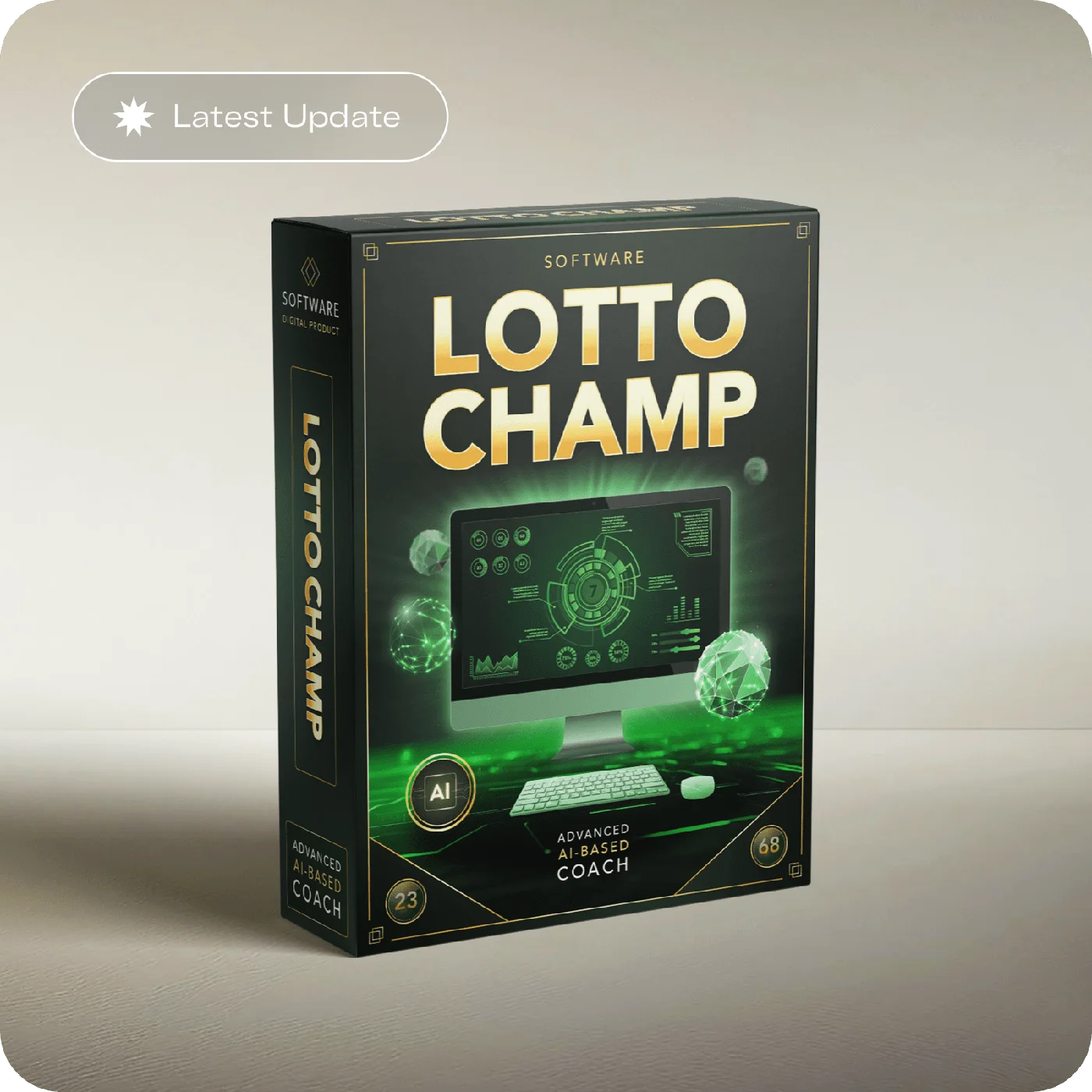
The tool this applies to
LottoChamp's members area generates and stores your selections for a single payment, with 60 days to change your mind.
Open the Official CheckoutFrequently asked questions
How much is a reasonable amount to spend?
There is no universal figure — the test is whether the amount is comfortably disposable for you and whether you would be content having spent it on any other entertainment. If losing it would affect a bill, it is too much.
Is a syndicate a good idea?
It spreads the cost and increases the number of combinations covered, at the cost of splitting any prize. Agree the terms in writing before you start; informal syndicates are a well-known source of disputes.
Where can I get help if play stops being fun?
The National Problem Gambling Helpline is 1-800-522-4700 — free, confidential, 24/7, by phone, text or chat, in every US state.