Personalized play: seller description
The public seller FAQ says the tool can use details such as a game, date, budget, and ZIP code to return number suggestions. Check the live product flow and local game rules before relying on any feature.
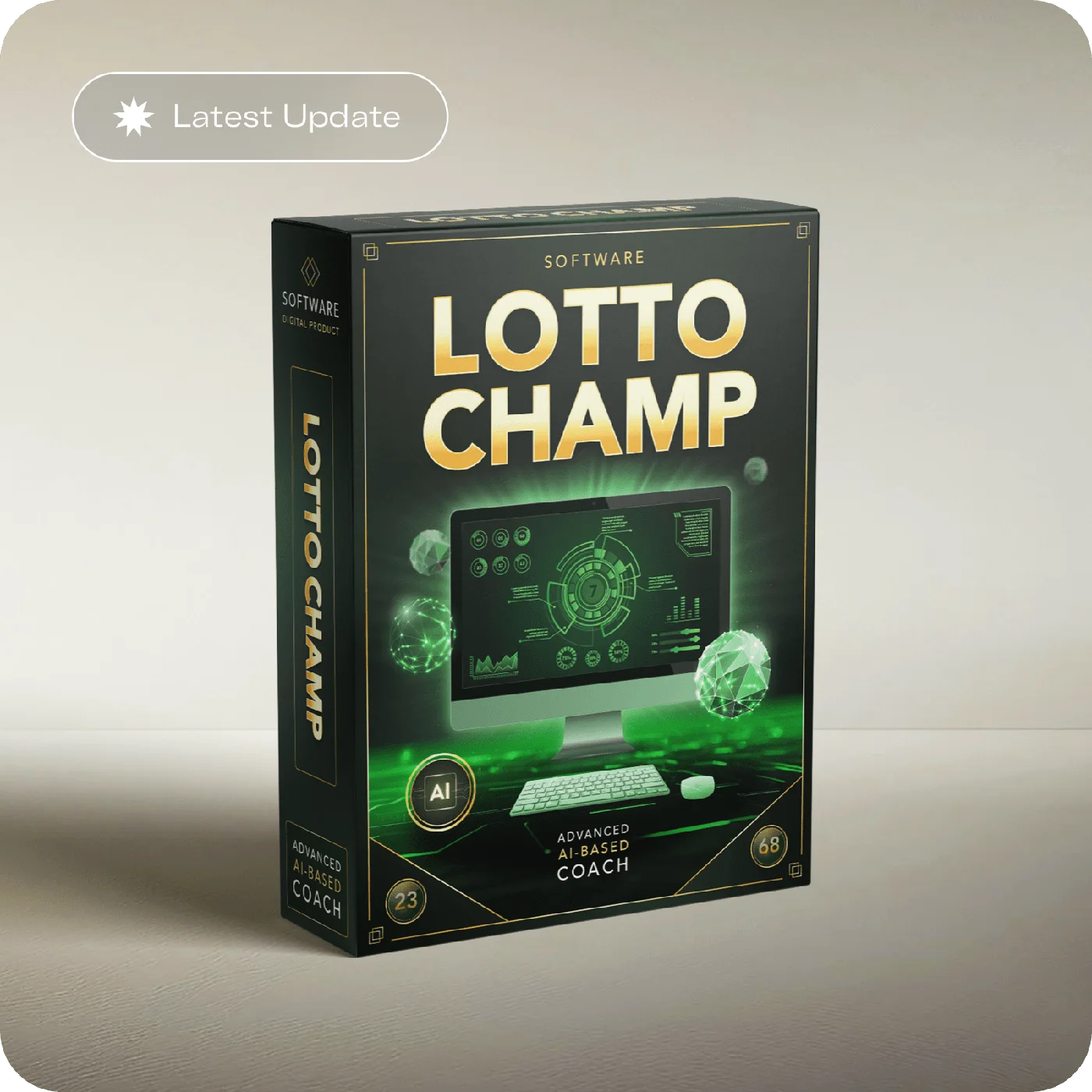
Lotto Champ (LottoChamp) is a lottery number generator membership with a single payment and lifetime access.
Use case: Adults who play lawfully and like a simple routine enter four inputs: the game, date, budget and ZIP code.
How it works: The web tool returns number suggestions on one results screen and saves your picks in a play log, with two ebooks included.
Membership terms as stated by the vendor on the official page. None of these is a statement about winning, and this site makes none. Lottery play is gambling and is for adults of legal age where they live — 18 in most US states.
Lotto Champ (LottoChamp) is a web-based lottery number generator sold as a one-time lifetime membership. You enter a game, a draw date, a budget and a location, and it returns number combinations you can save. It is software, not a physical product.
LottoChamp is a web-based lottery number generator sold as a one-time lifetime membership: you enter a game, a draw date, a budget and a location, and it returns number combinations you can save in a members area. It is software, not a physical product, and it cannot change the published odds of any draw. This page is an independent guide, not the LottoChamp developer, retailer or official brand site.
LottoChamp has no ingredients and no dosage. It is a digital web membership, not a capsule, gummy, powder or drop, and nothing is shipped. Access is a login to a members area after payment, so this page covers software only.
LottoChamp has no ingredients because the seller presents it as a digital web membership rather than a consumable product.
The seller presents LottoChamp as a web-based, AI-powered tool that provides number suggestions after a visitor supplies play details. The seller page does not publish a technical methodology, validation study, or performance evidence.
The product is a digital membership rather than a physical item. The seller describes instant access to a members area after a one-time purchase, subject to the terms shown at checkout.
The public seller FAQ says the tool can use details such as a game, date, budget, and ZIP code to return number suggestions. Check the live product flow and local game rules before relying on any feature.
The seller describes the membership as a one-time payment with no monthly fees. Because billing terms can change, read the exact price, renewal language, and refund conditions at checkout before paying.
The seller advertises a 60-day money-back guarantee. This page cannot administer a refund, and a buyer should read the current seller and retailer terms for exclusions, deadlines, and contact steps.
No current price is displayed as readable text on the public seller page we checked. We do not estimate prices or publish a figure that a buyer cannot verify at the point of purchase.



Product marks and the guarantee seal as supplied by the vendor. They describe the software and the refund window and say nothing about outcomes. BuyGoods is the retailer of record.
The LottoChamp members area is the logged-in web page where your generated number strings are stored. Access to it is what the one-time payment buys. The seller also lists real-time updates and two digital bonus ebooks as membership features.
The seller lists a members area and real-time updates among the membership features. Those are seller descriptions, not independently tested performance findings.
The seller also offers two digital bonus ebooks with membership. Their availability and descriptions are seller-provided and should be checked before an order is placed.
LottoChamp is not a lottery operator, ticket issuer, government agency, investment service, or financial adviser. Use it only for lawful personal entertainment if you decide it is appropriate.
Get Offer
Lotto Champ works in a few steps: you enter four play details, such as the game, date, budget and ZIP code, read one results screen and save your picks in the play log. It makes no promise of results.
This guide lists only features and terms described on the direct public seller page.
Lottery participation can involve financial loss. Set a fixed entertainment amount you can afford to lose, avoid borrowing, and stop if participation is causing stress, conflict, or pressure to recover money.
Eligibility, age limits, game rules, and availability vary by location. Verify requirements with the relevant local lottery authority instead of assuming that a website or tool is available where you live.
Do not treat sales language about analysis, personalization, or data as a guarantee. This page makes no claim that a suggested number set changes a lottery result or produces a financial return.

Before you pay, check three LottoChamp terms: the one-time payment with no monthly fees, the lifetime access and the 60-day money-back guarantee. The seller shows the price only at checkout, so confirm the total there.
The live checkout, not marketing copy, provides the binding price and transaction terms.
We found no independent test results, customer ratings, or verified testimonials on the direct seller page that would support a product-performance conclusion. We do not add invented reviews or scores.
The sensible buying question is narrower: whether the seller-described digital access, number-suggestion workflow, and stated terms are worth the checkout price to you. Only the checkout can confirm the current transaction terms.
If you have questions about an order, account access, or refunds, contact the seller or retailer through the support information supplied with the purchase. This independent page cannot access customer accounts.
For transparency, the seller page was used as the source for product descriptions and terms. Content is refreshed when public seller details materially change; it is not a substitute for the terms displayed during purchase.
Responsible use means treating a lottery ticket as an entertainment cost you have already written off, never as a plan for income or debt repayment. That limit matters more than any feature of any tool.
Do not use gambling or lottery tools as a plan for income, debt repayment, or emergency expenses. Consider independent financial or gambling-harm support if spending is difficult to control.
The seller calls the access lifetime membership and says there are no monthly fees. Confirm that wording in the live checkout because the checkout terms control the actual purchase.
The seller page says the two ebooks are delivered as bonuses with the membership. They are general digital materials and should not be treated as personalized legal, tax, or financial advice.
This is an independent information page, not the LottoChamp developer or retailer. It summarizes only the current public seller page and does not promise any lottery, financial, or other outcome.
The seller presents LottoChamp as a web-based, AI-powered tool that provides number suggestions after a visitor supplies play details. The seller page does not publish a technical methodology, validation study, or performance evidence.
The product is a digital membership rather than a physical item. The seller describes instant access to a members area after a one-time purchase, subject to the terms shown at checkout.
Figures are the game operators' own published values. Nothing here is a system, a prediction or a promise. If lottery play has stopped being fun, free confidential help is available 24/7 from the National Problem Gambling Helpline on 1-800-522-4700.
The LottoChamp price is a single one-time payment shown only on the official checkout screen, not on the sales page. Everything below is a seller description, identified as such, and is not verified performance evidence.
BuyGoods is the retailer of record and processes payment and refunds. This site never sees your card details or your order.
Worth checking on the checkout screen: the actual figure, whether it is billed once as described, and the support address you would use inside the 60-day window. Screenshot it — a sales page can change, your receipt cannot.
The seller lists data-driven insights, a personalized play approach, real-time updates, a user-friendly interface and a members area. These are seller descriptions, not independently verified results, and no software can beat a random draw.
No customer ratings or testimonials are used to support this guide.
The public seller FAQ says the tool can use details such as a game, date, budget, and ZIP code to return number suggestions. Check the live product flow and local game rules before relying on any feature.
The seller describes the membership as a one-time payment with no monthly fees. Because billing terms can change, read the exact price, renewal language, and refund conditions at checkout before paying.
The seller advertises a 60-day money-back guarantee. This page cannot administer a refund, and a buyer should read the current seller and retailer terms for exclusions, deadlines, and contact steps.
No current price is displayed as readable text on the public seller page we checked. We do not estimate prices or publish a figure that a buyer cannot verify at the point of purchase.
The seller lists a members area and real-time updates among the membership features. Those are seller descriptions, not independently tested performance findings.
The seller also offers two digital bonus ebooks with membership. Their availability and descriptions are seller-provided and should be checked before an order is placed.

Reproduced as published. The $290 is a stated retail value for two ebooks; stated values on digital bonuses are a marketing convention rather than a price anyone pays.
LottoChamp has clear technical limits. The vendor publishes no method or independent validation for its analysis, and jackpot odds are a fixed count of combinations that no software changes. Only legally eligible adults should use it, as entertainment.
Only legally eligible adults should consider lottery-related products, and only as optional entertainment.
LottoChamp is not a lottery operator, ticket issuer, government agency, investment service, or financial adviser. Use it only for lawful personal entertainment if you decide it is appropriate.
Lottery participation can involve financial loss. Set a fixed entertainment amount you can afford to lose, avoid borrowing, and stop if participation is causing stress, conflict, or pressure to recover money.
Eligibility, age limits, game rules, and availability vary by location. Verify requirements with the relevant local lottery authority instead of assuming that a website or tool is available where you live.
Do not treat sales language about analysis, personalization, or data as a guarantee. This page makes no claim that a suggested number set changes a lottery result or produces a financial return.
We found no independent test results, customer ratings, or verified testimonials on the direct seller page that would support a product-performance conclusion. We do not add invented reviews or scores.
The sensible buying question is narrower: whether the seller-described digital access, number-suggestion workflow, and stated terms are worth the checkout price to you. Only the checkout can confirm the current transaction terms.
Buying LottoChamp with clear expectations means knowing before you pay that you are buying a number generator and a saved play log, not an edge on any draw. The two digital bonuses are general reading, not personal legal, tax or financial advice.
If you have questions about an order, account access, or refunds, contact the seller or retailer through the support information supplied with the purchase. This independent page cannot access customer accounts.
For transparency, the seller page was used as the source for product descriptions and terms. Content is refreshed when public seller details materially change; it is not a substitute for the terms displayed during purchase.
Do not use gambling or lottery tools as a plan for income, debt repayment, or emergency expenses. Consider independent financial or gambling-harm support if spending is difficult to control.
Lottery play is gambling. It is for adults of legal age where they live — 18 in most US states, 21 in a few — and only with money you can comfortably afford to lose. Tickets are not an investment and no product can change the odds of a draw. If gambling has stopped being fun, free confidential help is available 24/7 from the National Problem Gambling Helpline on 1-800-522-4700.
The seller names two digital bonus ebooks that come with LottoChamp membership, at a stated $145 value. They are general reading, not legal, tax or financial advice, and the stated value is a seller figure, not a price.
Use the seller's current support channels for account, billing, and refund questions.

$145 stated value
The seller calls the access lifetime membership and says there are no monthly fees. Confirm that wording in the live checkout because the checkout terms control the actual purchase.

$145 stated value
The seller page says the two ebooks are delivered as bonuses with the membership. They are general digital materials and should not be treated as personalized legal, tax, or financial advice.
Both are general personal-finance ebooks. Neither is financial, tax or legal advice — and neither are we. Anything involving your real money belongs with a licensed professional, not an ebook bundled with software.
LottoChamp is sold only from the vendor's own official website, with BuyGoods as the retailer of record at checkout. It is not sold on Amazon, Walmart or eBay. The price appears only at checkout, so check the total there.
LottoChamp is sold only from the vendor’s own official website through BuyGoods, the retailer of record named on the checkout page; it is not stocked by Amazon, Walmart, eBay or any pharmacy, and there is no physical box to buy in a shop. That single sales channel is the practical reason to start at the official website rather than at a marketplace listing that claims to resell it.
Price. The public sales page we examined does not print a figure anywhere. The amount appears for the first time on the BuyGoods order form, where it is described as a one-time payment for lifetime members-area access with no stated renewal. We are not going to publish an estimate, because a guessed price is exactly the kind of claim that later turns out to be wrong — read the total on the order form, and screenshot it before you pay.
Is it a capsule, a gummy or a liquid drop? None of those. LottoChamp is web software. There is no tablet, capsule, gummy, powder, drop or dietary supplement of any kind, no ingredient list, no dosage and no shipping — access is delivered as a login to a members area immediately after payment. If you find a listing selling “LottoChamp capsules”, it is not this product.
Refunds. The seller advertises a 60-day money-back guarantee, and refunds on this kind of purchase are handled by the retailer of record rather than by the software vendor. The Federal Trade Commission’s guidance on disputing credit card charges is the fallback if a merchant does not honour its own published terms.
LottoChamp is not obviously a scam, because buyers receive the members area and generator that are advertised. The fair criticism is the marketing, which implies an edge over a random draw that no software can deliver, and a price hidden until checkout.
A scam, in the sense that matters legally, is a product that takes money for something it never delivers. By that test LottoChamp is not obviously one: buyers do receive a working members area with a generator in it. The fair criticism is different and worth stating plainly — the marketing frames a tool that cannot affect a draw as though it might, and that framing is where the risk of disappointment sits.
To be explicit about the limits of this page: there is no published evidence that LottoChamp improves anyone’s chance of winning, no independent test of its output, no peer-reviewed work supporting number-selection systems of this type, and no winner record we were able to verify. That absence is not proof the tool is worthless as a convenience — it is proof that any claim about outcomes is unsupported. Genuine prize fraud looks different again, and the FTC documents the pattern in fake prize, sweepstakes and lottery scams: if you are asked to pay a fee to collect a prize, that is the scam, whatever software picked the numbers.
Buyer feedback on tools in this category splits into two groups that talk past each other. People who bought a convenience — a fast way to produce and store valid combinations — generally describe getting what they expected. People who bought an edge describe disappointment, and their complaints are almost always about outcomes that no generator could have delivered. We do not host, collect or score customer ratings on this site, and we would treat any star average you find for a product sold through a single affiliate channel with caution. Published game odds, such as Powerball’s official prize chart, remain the only numbers on this subject that anybody can independently check.
If lottery spending has stopped feeling like entertainment, the National Council on Problem Gambling runs a free, confidential 24/7 helpline on 1-800-522-4700.
These answers cover what LottoChamp is, whether it uses machine learning, how it works, its price, the 60-day guarantee, reviews, login and where to buy it. Each one follows the seller page.
The seller describes LottoChamp as an AI-powered web tool that turns your inputs into number suggestions. Its listed features, such as data-driven insights, are seller descriptions, not independently verified results. No software can give you an advantage over a random draw.
You enter four play details, such as the game, date, budget and ZIP code, and the members area turns them into number strings. You read one results screen and can save your picks in the play log. LottoChamp makes no promise of results.
No. The seller says it is a one-time payment with lifetime access and no monthly fees. Confirm the exact terms at checkout before you buy, because the live checkout total is the one that applies.
The public seller page we checked did not show a readable price, so the cost is only visible at checkout. The seller says it is a single payment with lifetime access and no monthly fees. Check the live checkout total before you buy.
The seller advertises a 60-day money-back guarantee. BuyGoods is the retailer of record, so current seller and retailer terms decide eligibility and refund steps. Keep your order confirmation. This guide cannot process refunds.
Use only where legal, only if you meet local age and eligibility rules, and only with money you can afford to lose. Do not treat lottery participation as income, debt recovery, or financial advice.
Lotto Champ is sold only on the vendor's own official website. BuyGoods is named on the checkout as the retailer of record, and it handles the payment and any refund. It is not sold on Amazon, Walmart, eBay or in any shop, and there is nothing physical to ship.
None of those. LottoChamp is web software, so there is no tablet, capsule, gummy, powder, drop or supplement of any kind, no ingredient list, no dosage and nothing to ship. Access is a login to a members area, delivered immediately after payment.
Buyers do receive the members area and generator that are advertised, so it does not fit the legal test of taking money for nothing. The honest criticism is that the marketing implies an advantage over a random draw that no software can deliver, and that the price is hidden until checkout.
Feedback splits between people who wanted a fast way to generate and store combinations, who broadly got that, and people who expected better odds, who did not. We do not collect or publish customer ratings, and a star average for a product sold through a single affiliate channel is worth little.
Access is a login to the LottoChamp members area, delivered immediately after payment. Keep your order confirmation, because BuyGoods is the retailer of record and processes the payment and any refund. This guide cannot see or change your account.
Only spend money you can afford to lose, and set a fixed limit before you play. The LottoChamp play log records what you play, so you can check it against your limit. Lottery play is not income, debt recovery or financial advice.
Lifetime members-area access, both ebooks and a 60-day refund window. The vendor only shows the price at checkout, so that is where the decision actually gets made.
Get OfferSingle payment · 60-day guarantee · 18+ · play responsibly